





Pay phone experiment connects Boomers and Gen Z across the country
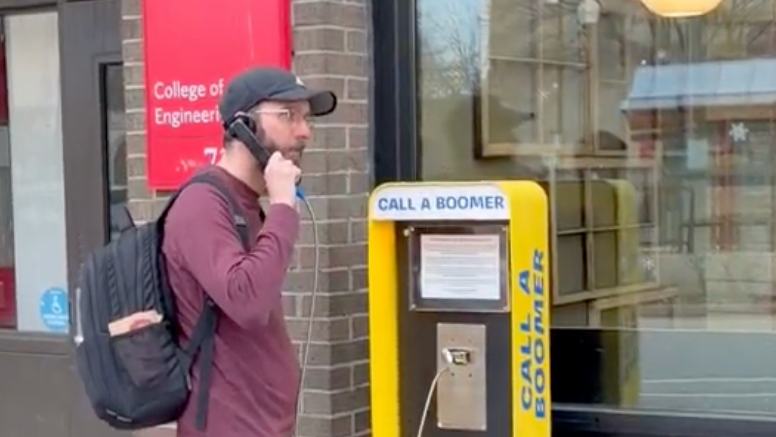
A new social experiment wants to connect Boomers and Zoomers by getting them to talk to one another – over an old school phone.
- The LIFE program provides community-based services for seniors and adults with disabilities, but eight counties currently lack a provider.
- State officials aim to increase rural enrollment in the LIFE program from 2,175 to 3,654 by 2031 using the new funds.
- Advocates argue that the LIFE program is more cost-effective than home care or nursing homes, saving the state Medicaid budget.
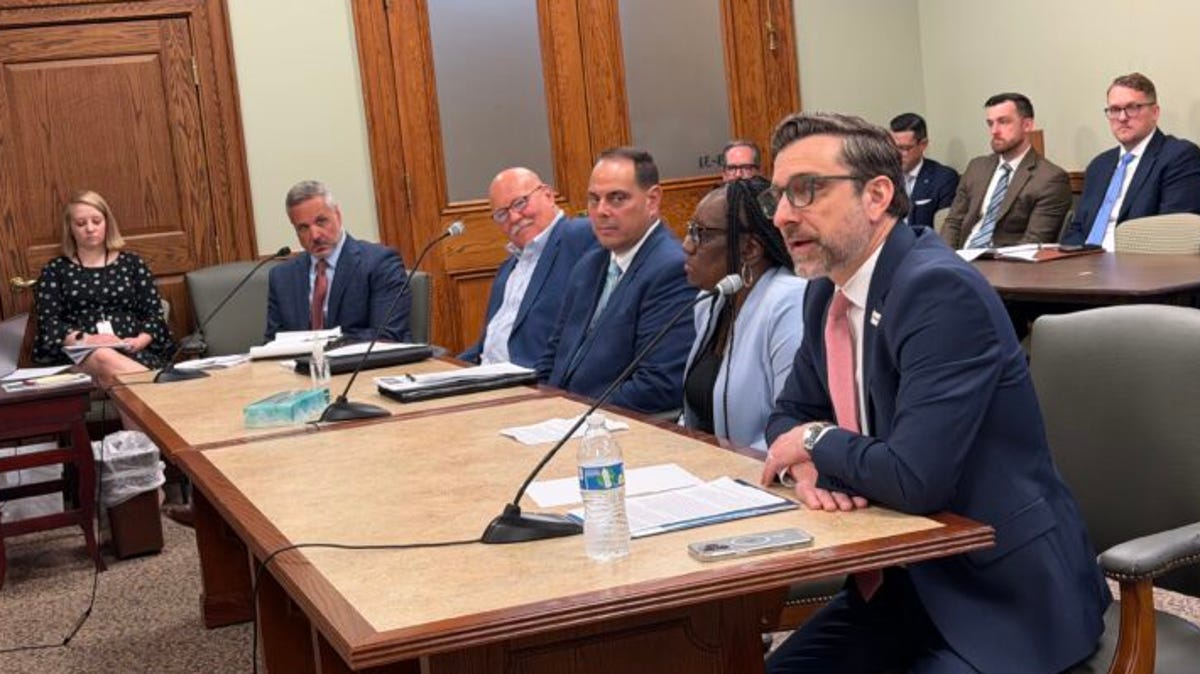
In a rapidly aging state, Pennsylvania officials are identifying ways to shore up services dedicated to its seniors — and $193 million for rural health could help build out a longstanding program to every corner of the commonwealth.
The Living Independence for the Elderly, or LIFE, had 8,446 unique participants as of summer 2025, the third-highest enrollment in the country. Other states refer to it as Programs of All-Inclusive Care for the Elderly, or PACE. But growth in recent years has been relatively stagnant, according to Juliet Marsala, the state deputy secretary for the Office of Long Term Living.
“We continue to look at all opportunities to further develop, expand and move the needle with the LIFE program,” Marsala said. “I would like to see more people use it. The numbers are staying, I think, only less than a percent (in growth). But, I would rather see them increasing to 4, 5 or 6% a year. Or even higher.”
Pennsylvanians over the age of 55 and adults with disabilities in need of specialized care can qualify. They can get transportation services and home support like nurses through LIFE, which centers around a community-based day center that offers on-site doctor appointments, meals and recreation.
But even after an October push, eight counties still don’t have any assigned life providers.
“We’re still trying to get each and every single county covered,” Marsala said.
Dollars from the federal Rural Health Transformation Plan could provide that final push, she continued, “propelling the LIFE program model into some of our most rural counties.” The state’s application also emphasizes the ability to coordinate services across different payers, like Medicaid and Medicare.
Additionally, federal dollars are specifically earmarked for expanding telehealth at LIFE centers, which could connect seniors with far-off specialists from the convenience of the day center.
“This initiative is designed to bridge care gaps for rural seniors by delivering whole person, wraparound services that address both physical and mental health needs,” Marsala said. “(It’s) an opportunity for an older adult to get all of their services in one place and not have to worry about all the disparate numbers of payers.”
Of the federal rural health dollars, the state has $77.1 million to spend on aging and access goals, aiming to increase rural enrollment in LIFE from 2,175 people today to 3,654 by 2031.
Request for more state investment
Pennsylvania has the fifth-oldest population in the country and the third-largest rural population, and stakeholders emphasize the need to prioritize long-term care options outside the state’s urban centers.
Day centers, such as those operated by LIFE, are more cost effective than home care nursing and cheaper than nursing homes. In 2023, attending an adult day center operating five days a week cost $24,700 annually — compared to $68,640 for a full-time home health aide and $104,025 for a semi-private room in a nursing home, according to health policy organization KFF.
Medicare, which is funded by the federal government, doesn’t pay for extended long-term care costs — but Medicaid, which is split between federal and state governments, does, paying for 44% of all costs in 2023.
“For every individual who receives care through LIFE instead of (Community Health Choices), the state Medicaid budget saves over $39,000 each year. This translates to roughly $300 million in annual Medicaid savings,” said Chuck Quinnan, the senior vice president and chief of government affairs for Leading Age PA. “In many ways, LIFE reflects exactly where health care policy is headed nationally.”
Community Health Choices, or CHC, is an alternative program for older and disabled Pennsylvanians coordinating care at home and in nursing facilities but not at day centers. However, it pays for services at a higher rate and has more provider choices for consumers.
Quinnan and others urged lawmakers to devote more funding to increase LIFE payments to 60% of comparable costs, up from the current 56%, which he said would cost $19.3 million while still providing state savings. Federal law requires rates be below amounts that “would otherwise be paid” for other services such as CHC.
Marsala said the agency used other federal funding to shore up data collection at LIFE providers, which she said was necessary to increase rates.
“Every provider is at a different place with their technology, their data systems and their (Medicaid) encounter collection,” Marsala said. “In order to be on par with Community Health Choices, there’s a baseline of reports that are necessary.”
Educating the public about the program itself has been a challenge, Marsala and providers both said, though the state is required to mail flyers to eligible individuals annually. Unlike alternative long-term care programs like Medicare Advantage, which can inundate airways with advertising, LIFE programs are limited in their ability to market themselves.
“Pennsylvania has been a leader in supporting seniors to live independently at home. Today, that leadership is at risk,” said Robb McQuillan, the vice president of operations at One Senior Care. “Not because the model doesn’t work, but because of the barriers to access.”
Collaborations as the foundation for rural care
McQuillan’s organization includes LIFE-Northwest Pennsylvania (LIFE-NWPA), which has the largest geographical footprint of any provider and a presence in 12 counties, including Erie County but many of them rural.
“Providing health care in rural settings, your population that you’re serving is typically spread out. Or there are small pockets and then there’s large distances between them,” McQuillan said. “What you really need to do is start to work with the community services that are already in existence.”
Working within the existing infrastructure is a core tenet of the state’s Rural Health Transformation plan, connecting LIFE centers as “anchors for integrated care teams” linked to local providers and community-based organizations.
Or it can work to try to close access gaps.
In McKean County, which LIFE-NWPA covers, the centers can connect older, rural adults to providers in other parts of the state using telehealth appointments following the closure of the area’s hospital, Bradford Regional Medical Center.
“When hospital systems close or community doctors retire and move out of the area, we then have the ability to step in and start to bring those services back to that community,” McQuillan said. “We’re bringing federal and state dollars to bear in rural communities to provide, or continue to provide, health care services for those individuals.”
LIFE supporters point to research suggesting that such care prevents hospitalizations and stabilizes patient conditions — that it “not only improves care, but meaningfully reduces the financial burdens in the commonwealth.”
“The real opportunity here is not within a single budget cycle, it is how we think about long-term fiscal responsibility,” McQuillan said. “We have an opportunity to take a longer view, improve health outcomes, strengthen families and communities, and make smarter, more sustainable financial decisions.
“The question is not whether or not LIFE works … the question is whether we are willing to act in a way that sets up the commonwealth for long-term success.”
In a tight budget year, it’s unclear if providers will get more support. The latest version of the budget, which passed the full House April 14, doesn’t include a line-item increase for medical assistance under the Office of Long Term Living, trimming it from $217 million to $191 million. LIFE represents just a portion of that funding.
Whitney Downard reports for Pennsylvania Capital-Star, part of States Newsroom, the nation’s largest state-focused nonprofit news organization.
link